



 Pay in 3 interest-free installments


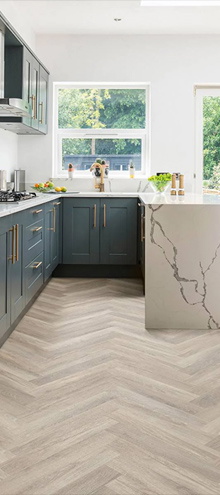
Once you’ve decided on your perfect kitchen flooring, you’ll be eager to get it installed and give your room a new look, but should you fit your flooring before or after the rest of your kitchen?
Whether you’ve moved into a new home or you’ve noticed the signs that your kitchen needs a remodel, it’s essential to know which order of installation works best for your kitchen flooring ideas. We’ll go through your options and explain the different factors that can influence your decision, so you can make the right choice before you start your remodel.
Should I fit my flooring before or after my kitchen units?
Whether you should install a floor before or after kitchen units depends on the material you’re using, the installation method you’ve chosen, and your personal preference. Installing your kitchen first allows you to repair or replace your flooring more easily in the future, but installing your flooring first will make measuring the materials you need much easier.
As mentioned, the order in which you install your floors and units mostly comes down to personal preference, but it’s important to know the differences between the two approaches so you can make an informed decision. Our guide below will help you decide whether to lay your flooring before or after your kitchen units.
Pros and cons of installing your flooring before your kitchen units
Let’s take a look at the pros and cons of installing your flooring before your kitchen units!
Pros
- Aesthetic advantages – since your flooring will be extending beneath your fitted kitchen units, installing your floors first can offer a more cohesive and well-finished look.
- Fit your flooring to your walls – if you’re planning on fitting your kitchen units in a complex layout, it can be a lot easier to fit your flooring to your walls than having to trim around the edges of your cabinetry.
- Favoured by plumbing professionals – plumbers will often recommend installing your flooring first to make securing pipes and fixtures easier.
- Wood and tile floors – if you’re using real wood or tiles for your kitchen flooring, experts will often recommend installing your materials before your units to get the most of their visual appeal.
Cons
- Higher cost – since you’ll be covering more space when installing your flooring before your kitchen units, you can expect to pay slightly more for your materials.
- Damage risk – it’s possible to scratch or damage your flooring if you install your flooring before your units, and if something goes wrong with the unit install, you could flood your kitchen and need to replace your flooring.
Pros and cons of installing your flooring after your kitchen units
Now that we’ve discussed the upsides and downsides of installing your units first, below are the key differences with installing your kitchen flooring first.
Pros
- Affordability – installing your flooring after your kitchen units helps to save money on materials, as you need to cover a smaller surface area. The more units you’re installing, the more you’ll save!
- Safety – there’s less risk of damage or flooding to your new flooring when installing it after your kitchen units. If there are any installation issues, you can sort them out before bringing your flooring in.
- Easily replace your kitchen units – installing your kitchen before your flooring will make it easier to remove and replace the units if necessary.
Cons
- Installation – you’ll have to trim your flooring to fit perfectly around your kitchen units, which can be tricker than cutting to the wall, especially if you’re DIYing the floor.
- Aesthetics – the floor must be trimmed exactly flush to the units to avoid visible edges; your kitchen is likely to have a more cohesive and well-finished look if you cover your whole floor with your materials.
When should I install different flooring types?
Different types of flooring might better suit being installed in a particular order. If you’ve already chosen your flooring material, we’ll help you decide whether to install your floor before or after your kitchen.
Wood or tile floors
Most professionals will recommend installing your wood or tile floors ahead of your kitchen units. This ensures you get the best finish possible by giving your floors a seamless look that fits around your whole room.
Laminate floors
When deciding if you should install laminate before or after kitchen cabinetry, it’s typically recommended to lay it once the rest of your kitchen is installed. This helps to reduce the risk of damage and allows you to cut your materials down to size more easily. You should also make sure to install your materials after your cabinets if you’re planning on floating your floor, as you’ll be able to create a large enough expansion gap to keep your laminate in ideal shape.
LVT floors
If you’re wondering whether to install LVT flooring before or after kitchen units in your home, it’s generally recommended to fit your kitchen first and lay your LVT around it. This prevents your flooring from being damaged during your kitchen installation, and gives your vinyl a suitable expansion gap, meaning you won’t be damaging your tiles over time.
There’s no definitive answer to whether you should install a floor before or after your kitchen units, so it’s crucial to weigh up your options and make the best choice for your preferences. You should also ask your flooring installation company for their advice if you’re hiring professionals, as they’ll be able to help you decide and give you the best flooring possible for your kitchen ideas.
Ready to buy the flooring materials to remodel your kitchen? Browse Flooring King’s collection to find the best options to suit your budget and preferences. We offer the best UK brands at great prices so that you can find fantastic offers on a variety of kitchen flooring options.
Still looking for more guidance with your flooring? Read our guide to underfloor heating for wooden floors, so you can keep your home warm without damaging your materials.