About Quick-Step LVT Finishes
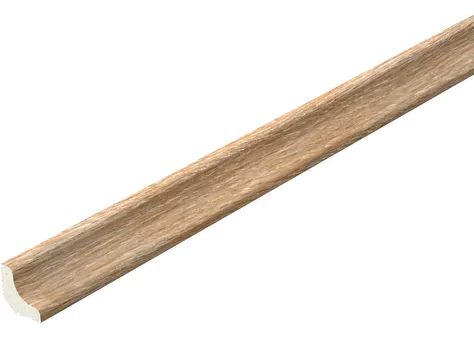
Quick-Step LVT Finishes belongs to the finishing details around a floor; the profile creates a defined shape at a junction, with its dimensions tied to the surfaces beside it. You see the finished edge, while the section beneath it has a specific job within the floor system.
A small change at the perimeter can affect the appearance of the whole room; the finish may relate to the floor colour or to the wall detail, depending on the product. The selected profile determines the shape of that boundary at floor level.
The profile may continue around a room or appear only at a single junction, depending on its purpose; you get a different visual line from each use, even with the same colour. The length supplied describes the piece itself, while its cross-section shows how it relates to the adjoining floor and wall.
You can browse flooring accessories within our wider flooring selection.
What are flooring trims
Flooring trims are profiles used at the boundaries of a floor or where it meets another surface. Different shapes have different jobs, from covering an edge to forming a junction at the wall. The visible finish is only one part of the profile.
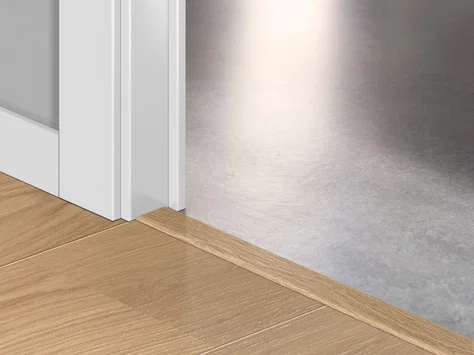
You may see a trim at a doorway or along the perimeter of a room. Other profiles sit beneath a shaped sheet floor or finish the top of an upstand. The section of the product determines its role, so flooring trims include several types of finishing detail.
A finished edge around the room
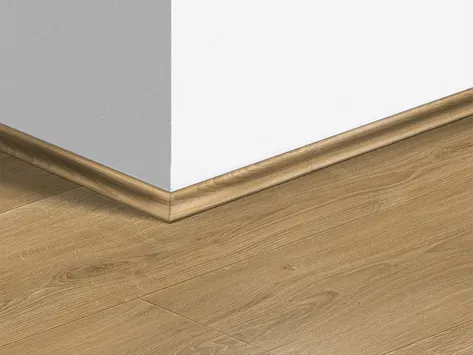
The point where a floor meets the wall can affect the whole appearance of a room; a matching finish creates less contrast at that boundary, while a different colour makes the edge more visible. The shape of the profile changes the line as well.
With sheet flooring, a curved junction and a top edge detail can form parts of the same perimeter finish. With other floors, the trim may cover a gap or define the meeting of two surfaces. The result depends on the selected profile and the floor system around it.
You can also find cap and cove profiles among the related products across the Flooring King catalogue.
Colours and materials at floor level
A trim can have a similar tone to the floor or relate to the skirting and doors instead; that gives you different ways to finish a room without changing the main floor covering. A small strip can still be noticeable because it runs along a clear boundary.
The material affects the feel and appearance of the profile, as well as its approved use; a metal threshold and a flexible edge profile have different properties. Colour alone does not establish where a trim belongs. The section drawing describes the shape beneath the visible finish.
Profiles for different junctions
A level doorway and a junction between two different floor heights need different details; the dimensions of the trim relate to those surfaces, rather than to the room area. Some profiles are specific to a manufacturer’s floor system.
The amount of visible trim also varies with the chosen section; a narrow edge line gives a different finish from a broader threshold across a doorway. Fixing requirements belong to the exact product and the base beneath it. The right profile has a defined place at the edge of the floor.