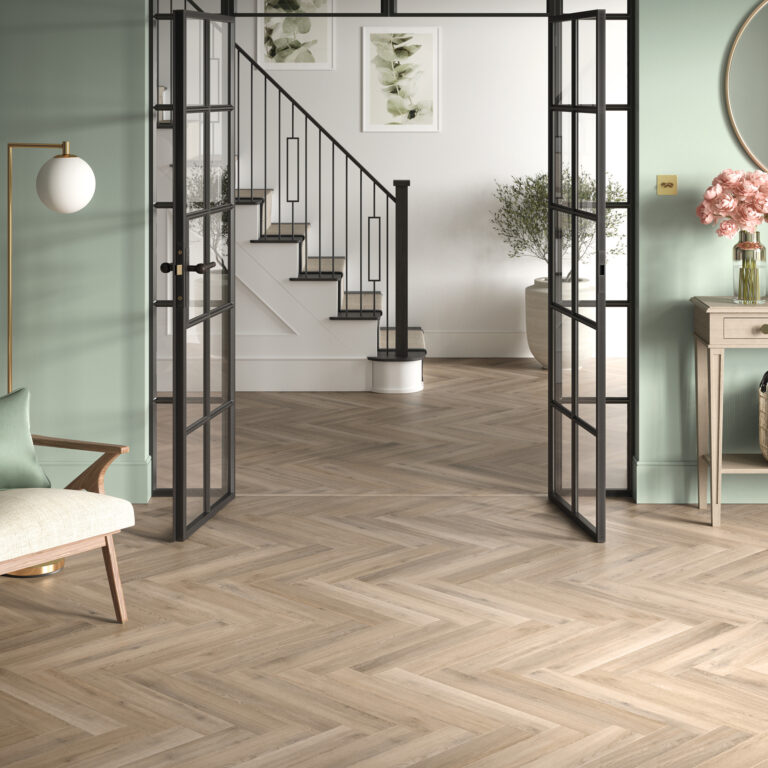
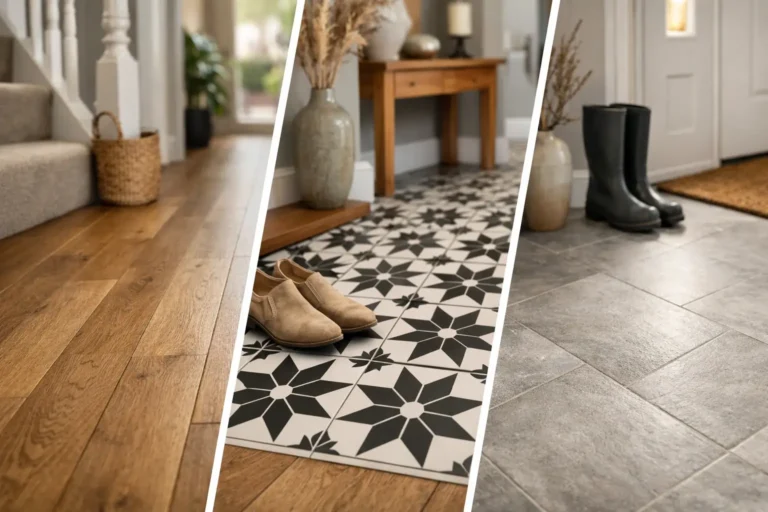
The clack of shoes across a hallway, toys dropping in the room above and the hum of voices travelling through a flat can make a home feel far busier than it is. If you are asking which floors reduce noise, the answer is usually not the hardest or thickest-looking option. The quietest result comes from a floor that absorbs sound, limits impact noise and is fitted over the right underlay or acoustic layer.
Carpet is the clear leader for everyday quiet. Yet LVT, sheet vinyl, engineered wood and even selected laminate planks can all make sense where you need a more practical surface. The key is knowing what type of noise you are trying to control before choosing a finish.
First, identify the noise you want to reduce
Flooring affects two different kinds of sound. Impact noise is created when something hits the floor: footsteps, chair legs, dropped objects and children playing. This is the sound most people notice between upstairs and downstairs rooms, or in a flat with neighbours below.
Airborne noise travels through the air, such as conversation, television or music. Flooring can soften echoes within a room, but it cannot fully stop airborne sound passing through walls, ceilings, gaps around pipes or an uninsulated timber floor. That distinction matters. A soft floor may make a room feel noticeably calmer while doing less to block a neighbour’s loud television.
For most homes, reducing impact noise and room echo is the realistic goal. This is where your floor covering, subfloor preparation and installation method work together.
Which floors reduce noise best?
Carpet is the quietest choice
Carpet is soft, warm, quiet – bare-foot territory. Its pile absorbs sound rather than reflecting it, helping to reduce footfall noise and the sharp echo common in rooms with lots of hard surfaces. A good carpet underlay adds another cushioning layer, making the difference underfoot and in the rooms below.
For upper floors, stairs, bedrooms and busy family spaces, carpet remains difficult to beat. A denser carpet and quality underlay will generally control noise better than a thin, lightweight option. That does not always mean choosing the deepest pile, though. In a high-traffic area, a durable twist or loop-style carpet with a supportive underlay may be the more sensible long-term choice.
Carpet is less suitable where spills, muddy shoes or regular moisture are part of the picture. It can also need more routine cleaning than a wipe-clean hard floor. But when quiet is the first priority, it is the strongest all-round answer.
Carpet tiles suit practical, quieter spaces
Carpet tiles offer many of the acoustic benefits of broadloom carpet, with a more modular format. They can be especially useful in home offices, rental properties, communal areas and commercial settings where one damaged section may need replacing rather than the whole floor.
Their performance depends on the backing, the subfloor and the fitting system, so check the product specification rather than assuming every carpet tile will offer the same sound reduction. A well-fitted commercial carpet tile can help soften footfall and improve the acoustics of a room with desks, hard furniture and frequent movement.
LVT can be quiet with the right construction
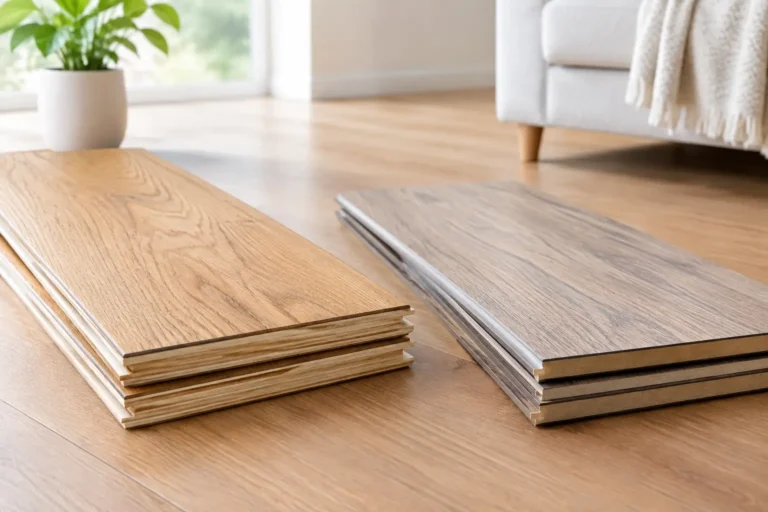
Luxury vinyl tile is waterproof, durable and realistic, but its acoustic performance varies considerably. Glue-down LVT is often thin and firm underfoot, so by itself it will not absorb sound like carpet. It can still be a sensible option in homes that need easy cleaning and a realistic wood or stone look, particularly when fitted over a suitable acoustic smoothing or underlay system approved for the product.
Click LVT with an integrated backing may feel softer and quieter than an unbacked rigid plank. This can reduce the hollow footfall sound sometimes associated with hard floors. Look for manufacturer acoustic test data, commonly shown as a decibel figure for impact sound reduction, rather than relying on a backing alone.
There is a trade-off. A thick, soft underlay is not automatically compatible with click systems. Too much movement beneath the planks can strain locking joints and lead to gaps or damage. Always follow the flooring manufacturer’s limits for underlay thickness, density and compression strength.
Sheet vinyl offers a softer hard-floor feel
Sheet vinyl has a naturally resilient surface, so footsteps and dropped objects tend to sound less sharp than they do on ceramic tiles, stone or a very rigid plank floor. Cushioned sheet vinyl can be a useful choice for utility spaces, kitchens and care environments where easy maintenance matters but you do not want the acoustics of a hard, echoing surface.
It will not deliver the same level of sound absorption as carpet. However, it can make a noticeable difference to comfort and impact noise compared with unforgiving hard finishes. A smooth, properly prepared subfloor is essential, as imperfections can show through and affect the finished result.
Engineered wood can be improved with an acoustic underlay
Engineered wood brings genuine timber at the surface and a more stable layered construction than solid wood. It is still a hard floor, meaning it reflects more sound within a room than carpet does. Heels, pet claws and furniture movement will be more audible, especially in an open-plan space.
A floating engineered wood floor fitted with a compatible acoustic underlay can reduce impact transmission through the floor structure. It may be a good balance where the appearance of wood is central to the project but a completely hard, noisy feel is not wanted. Glue-down engineered wood generally feels more solid underfoot and can avoid the drum-like sound that may occur with poorly installed floating floors, although its acoustic result still depends on the subfloor build-up.
Be cautious with underfloor heating. Choose an underlay that is approved for both the wood floor and the heating system, with a low enough tog value to let heat pass efficiently.
Laminate planks need careful specification
Laminate planks are realistic, hard-wearing and kind on the budget, but they are not naturally the quietest option. Their hard surface and floating installation can create a clicking or hollow sound if the subfloor is uneven, the wrong underlay is used or expansion gaps are not correctly finished.
That does not rule them out. Many modern laminate ranges are designed for quieter footfall when paired with the manufacturer’s recommended acoustic underlay. Prioritise a dense underlay made for laminate rather than a soft, generic foam layer. It needs to cushion impact while supporting the click-lock system.
If you live in a flat, check the lease or building rules before fitting any hard floor. Some management companies require a specified acoustic rating or restrict hard coverings upstairs to prevent disturbance to neighbours.
The layer beneath the floor matters as much as the surface
A quieter floor is rarely achieved by simply laying a new covering over what is already there. The subfloor needs to be dry, clean, level and structurally sound. Gaps, loose boards and uneven areas can create movement that makes a floor noisier over time.
For timber upper floors, sound can travel through gaps around pipes, at room edges and between floorboards. Addressing these details before installation can be more effective than spending extra on a thicker floor finish. Acoustic sealants, suitable levelling work and correctly chosen underlays all have a role, but the exact build-up depends on whether the floor is timber, concrete, ground level or above another occupied room.
Do not confuse moisture barriers with acoustic underlays. Some products combine both functions, while others do not. On a concrete subfloor, moisture protection may be required; on a timber subfloor, trapping moisture with an unsuitable barrier can cause problems. Check the flooring and underlay instructions as a pair.
Choose by room, not just by material
A busy staircase and upstairs landing benefit most from carpet because repeated footfall is the main issue. A living room with a television, hard furniture and large windows may feel quieter with carpet, or with a resilient vinyl surface softened by rugs and curtains. In a kitchen, LVT or sheet vinyl can offer better day-to-day practicality, while an acoustic backing or approved underlay helps take the edge off footsteps.
For a home office, carpet tiles can reduce chair movement and room echo without making future repairs difficult. In rental homes and multi-occupancy properties, durability, cleanability and lease requirements may be just as important as the acoustic rating. The best choice is the one that meets all three.
What to look for before you buy
Ask for the product’s impact sound reduction figure in decibels where one is available, and check how it was tested. A higher figure can indicate better reduction, but results in a real home depend on the entire floor construction. An acoustic claim for a plank tested with a particular underlay does not necessarily apply if you fit it over a different layer.
Also check whether the floor is designed to be glued down or floated, whether it includes an attached backing, and what the manufacturer permits underneath it. For click floors, compressive strength is as important as softness. For glue-down LVT, the focus is usually on a smooth, stable subfloor and an adhesive system suitable for the setting.
Samples are useful here. Place them on the type of subfloor you have, walk across them in everyday shoes and tap them with a key or cup. It will not replace laboratory testing, but it gives a more honest sense of texture and surface noise in your own space.
A quiet home is built in layers: the right finish, a compatible underlay, careful preparation and fitting that leaves nothing loose to move or rattle. If the decision comes down to two similar products, choose the one with clear acoustic guidance and a floor build-up you can install correctly. That is where comfort lasts long after the new-floor excitement has worn off.