A pale oak floor can make a compact dining room feel brighter. A deep smoked plank can give a period hallway the weight it deserves. But when the samples arrive, engineered oak versus laminate is not simply a question of which one looks better. Both can deliver a convincing timber effect, yet they behave very differently once they are underfoot, exposed to muddy shoes or fitted across several rooms.
The right choice comes down to how much real wood matters to you, how the room is used and where you want to spend the budget. Here is how to make the decision with fewer surprises after fitting.
Engineered oak versus laminate at a glance
Engineered oak is real wood flooring. Each board has a surface layer of genuine oak over a stable plywood or multi-layer base. That construction helps it cope better with the natural expansion and contraction of timber than a solid oak board, while retaining the grain, texture and variation that only real wood provides.
Laminate uses a high-density fibreboard core, topped with a high-resolution decorative paper and a clear protective overlay. Modern designs can recreate oak knots, grain patterns and brushed finishes remarkably well. Some ranges also use embossed textures, so the feel follows the printed grain rather than feeling completely flat.
This means engineered oak is the choice for authentic material and a floor that develops character over time. Laminate is generally the better value route to an oak-look finish with dependable everyday protection. Neither answer is automatically better – it depends on the room and the result you want from it.
The difference you can see and feel
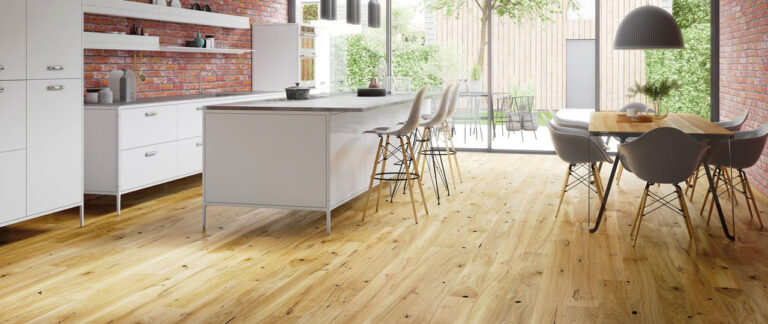
Oak has natural variation. Boards may include changing grain, small knots, mineral streaks and colour shifts from one plank to the next. This is part of the appeal, but it is worth viewing a full sample rather than expecting every board to match an image exactly. Brushed, oiled and matt lacquered finishes can make that texture even more noticeable.
An engineered oak floor also tends to sound and feel more substantial underfoot. It has the subtle irregularity of timber, particularly in wider planks or character-grade boards. If you are renovating a living room, dining space or main bedroom and want the floor itself to be a feature, this is often where the extra outlay makes sense.
Laminate is more consistent by design. Repeating patterns vary by range, so it is worth checking how many plank designs are included if you are covering a large open area. A good-quality laminate with a synchronised surface texture can look highly convincing from standing height, especially in natural and lighter oak tones. It offers a neater, more uniform look, which suits contemporary homes and rental projects well.
Everyday wear, spills and busy households
The protective wear layer on laminate is built for day-to-day scuffs, dropped toys and regular foot traffic. It is a practical option for hallways, lounges and bedrooms where a realistic timber look is wanted without the maintenance expectations of real wood. Look at the product’s use class and warranty rather than relying on thickness alone. A thicker board can feel more solid, but the surface specification tells you more about resistance to wear.
Engineered oak is durable, but it is still wood. Grit beneath shoes can mark a lacquered surface, heavy furniture can dent it and a dragged plant pot can leave a visible scrape. The upside is that a quality board with a sufficiently thick oak wear layer may be refreshed later by professional sanding and refinishing. Whether this is possible depends on the veneer thickness, the construction and the floor’s existing condition.
For family life, neither floor needs to be precious. Use entrance mats, felt pads beneath furniture and a soft brush or vacuum attachment to remove grit. Deal with spills promptly rather than letting water sit at the joints. Those small habits will do more for the finish than an expensive cleaning product.
Moisture is where the specification matters most
Do not assume all laminate boards react to moisture in the same way. Some products have water-resistant joints, sealed edges or moisture-repelling cores designed to give you more time to clean up a spill. That can make them a sensible choice for kitchens, utility rooms and busy entrances, provided they are fitted exactly as instructed.
Engineered oak should also be protected from standing water. Its layered construction provides greater stability than solid timber, but the oak surface and board edges are not suited to repeated soaking. A leaking dishwasher, wet bath mat or unventilated room can cause problems regardless of price.
For areas that are regularly wet, check the manufacturer’s room suitability before ordering. Bathrooms, in particular, demand a floor designed for frequent moisture and careful attention to sealing, subfloor preparation and ventilation. Choosing by appearance alone is an expensive mistake.
Fitting, subfloors and underfloor heating
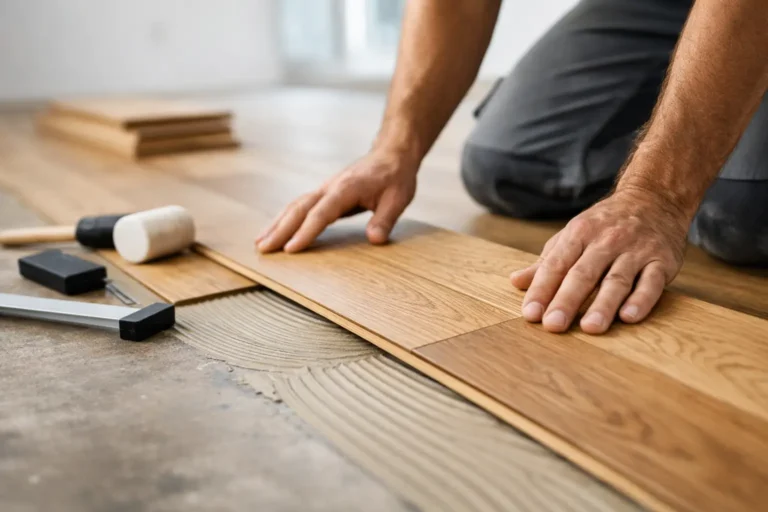
Both options can be fitted as a floating floor with compatible click systems, although engineered oak may also be glued down depending on the product and subfloor. Glue-down fitting can give a firmer feel underfoot and is often preferred for wider boards, but it requires a level, dry base and the correct adhesive.
Laminate click systems are usually straightforward and efficient to install, making them popular for competent DIYers and fast renovation work. The boards still need an even, sound subfloor. Laying a new surface over dips, loose boards or excess moisture does not solve the underlying problem – it simply transfers it into the finished floor.
Underfloor heating adds another check. Many engineered oak and laminate ranges are compatible with low-temperature water systems, but the product instructions set the limits. You will need to follow requirements for subfloor moisture, suitable underlay or adhesive, maximum surface temperature and gradual heating-up periods. Never assume one board’s approval applies to another simply because both are oak-effect or wood-based.
Cost: look beyond the price per square metre
Laminate normally costs less to buy and fit than engineered oak, leaving more of the budget for quality underlay, trims and proper subfloor preparation. It is a strong-value choice when you are refurbishing several bedrooms, preparing a rental property or want a smart update without committing to real wood.
Engineered oak carries a higher initial cost because it contains a genuine oak layer and often uses more complex construction. Prices also change with plank width, oak grade, finish, wear-layer depth and fitting method. A narrower, lacquered engineered board may be a more accessible route into real timber than a wide, hand-finished plank.
When comparing quotes, include everything needed to finish the room: underlay or adhesive, moisture barrier where required, scotia or skirting work, door bars, delivery and fitting. A cheaper board can lose its advantage if it is not suited to the subfloor or needs replacing sooner than expected.
Which rooms favour each option?
Engineered oak earns its place in rooms where warmth, authenticity and long-term appeal carry the most weight. Living rooms, dining rooms, bedrooms and carefully controlled open-plan spaces are natural candidates. Choose a finish that fits how you live: a textured, matt surface is often more forgiving of small marks than a very smooth, high-sheen look.
Laminate works particularly well where a practical, clean-lined finish is the priority. It can be ideal for bedrooms, hallways, upstairs landings and budget-led renovations. In kitchens, choose only a range rated by its manufacturer for that use and follow the fitting instructions closely around edges, pipes and doorways.
If sound is a concern in an upstairs room or flat, pair either floor with an underlay designed to reduce impact noise, provided it is approved for the chosen product. The wrong underlay can affect click joints, stability and warranty cover.
Make the final decision from real samples
Put samples beside your skirting, kitchen units and upholstery at different times of day. Oak can pull warmer, cooler or more golden depending on the light, while laminate’s printed pattern may look different across a full board than on a small cut piece. Check the texture with bare feet and place the sample where it will receive the strongest daylight.
At Flooring King, you can order up to three free no-obligation samples, which is a simple way to compare the tone and surface before committing to a full room. Pick engineered oak when you want real timber and accept the care that comes with it. Pick laminate when you want a convincing look, straightforward fitting and more budget left for the rest of the project. The best floor is the one that suits the room on an ordinary Tuesday, not just in a showroom photograph.