A timber floor can change the feel of a room before the furniture even arrives. It brings natural grain, warmth and character that printed finishes cannot quite replicate. But when choosing engineered wood versus solid wood, the best option is not simply the one that looks most traditional. It is the one that suits your room, subfloor, heating system, fitting plan and budget.
Both are genuine wood flooring. Both can add long-term appeal to a home. Their difference lies beneath the surface, and that construction affects how each floor handles everyday life in a UK property.
Engineered wood versus solid wood: the key difference
Solid wood flooring is made from a single piece of timber, usually oak, across its full thickness. Each plank is milled from one board and can be sanded and refinished several times over its lifespan, provided there is enough material remaining above the tongue and groove.
Engineered wood has a top layer of real hardwood, known as the wear layer, bonded to a stable core made from layers of plywood or other timber. This is not a photograph of wood or a wood-effect finish. The visible surface is real oak, walnut or another chosen species, complete with its own grain, knots and natural variation.
The layered construction makes engineered boards more dimensionally stable. Timber naturally expands and contracts as humidity changes. A well-made engineered board is designed to limit that movement, which gives it an advantage in many modern homes.
Where each type works best
Solid wood is a strong choice for dry, stable rooms where you want a traditional floor with maximum refinishing potential. A formal living room, dining room or carefully controlled period property can be a good setting. It has a distinctive, substantial feel underfoot and develops character over time.
However, solid boards need the right conditions. Seasonal changes in indoor temperature and moisture can cause movement, particularly in centrally heated homes. Gaps, cupping or lifted boards are more likely when the subfloor, acclimatisation period or fitting method is not right.
Engineered wood is usually the more flexible option for busy households and renovation projects. Its stability makes it suitable for living rooms, bedrooms, hallways and many open-plan spaces. It is also commonly selected for rooms with underfloor heating, as long as both the flooring specification and heating system are compatible.
Neither option is automatically suitable for bathrooms, wet rooms or areas prone to standing water. Real wood and repeated moisture do not mix well. A spill should be wiped up promptly, and wet footwear should not be left to dry on the floor.
Underfloor heating needs careful specification
Underfloor heating is one of the clearest points of difference. Solid wood can be more sensitive to heat and moisture changes, so it is often not recommended or comes with tighter installation requirements. Engineered wood is generally the safer route because its construction is less prone to movement.
That does not mean any engineered board can go over any heating system. Check the manufacturer’s temperature limit, usually with a maximum surface temperature of 27°C, and confirm the total thermal resistance of the flooring and underlay. The heating must be commissioned gradually, not turned up sharply after fitting.
Appearance: similar at first glance, different over time
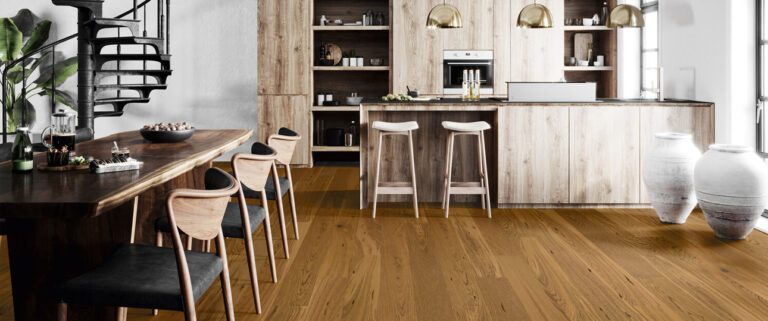
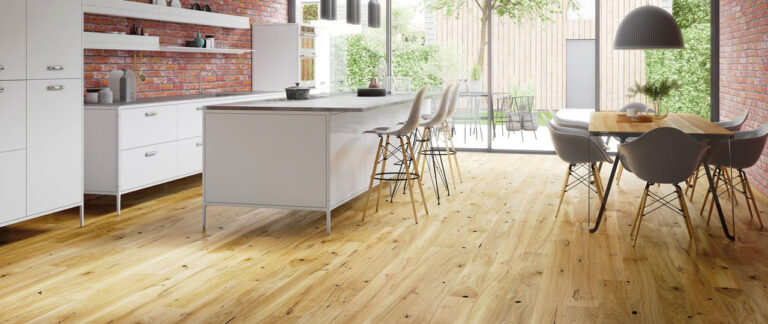
From above, a quality engineered oak floor and a solid oak floor can look remarkably similar. Board width, grade, stain, texture and finish have more influence on the finished look than the core construction alone.
For a clean, contemporary result, wider planks with a brushed matt finish can make a room feel open and relaxed. If you prefer a more characterful look, choose a rustic grade with visible knots, colour variation and natural markings. Smooth, lacquered boards tend to look more uniform and are straightforward to clean, while oiled finishes offer a more natural feel but need periodic care.
Solid wood has the edge if you want the deepest possible material to restore over decades. Yet engineered wood should not be dismissed as a short-term choice. A quality board with a thicker wear layer may be sanded and refinished, often more than once, depending on the product and the condition of the floor. Always check the stated wear-layer thickness before buying.
Fitting method, subfloor and disruption
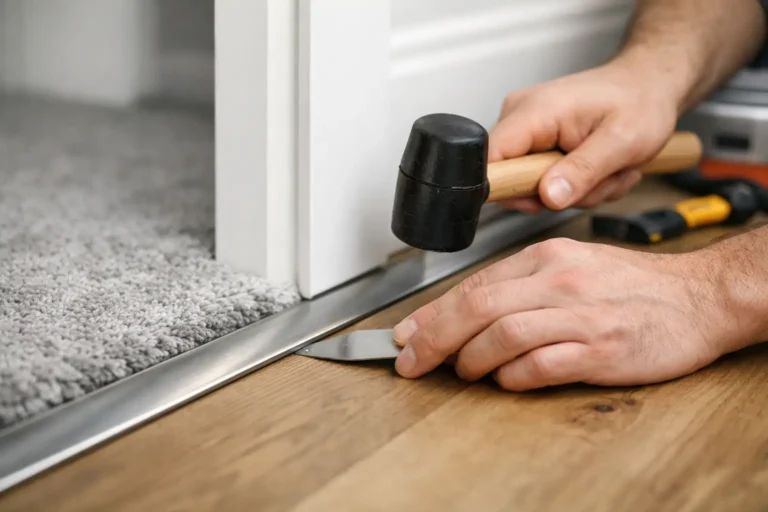
How the floor will be installed matters as much as which wood you choose. Solid wood is commonly fixed down, either secret-nailed to a suitable timber subfloor or fully bonded using an appropriate adhesive. It needs a dry, level and structurally sound base, with expansion space left around the room perimeter.
Engineered wood gives you more installation options. Depending on the product, it may be glued down for a firm, premium feel or installed as a floating floor using a click-lock or tongue-and-groove system. Floating installation can be practical for certain renovation projects, although the right underlay is essential for support, sound reduction and moisture protection where required.
Do not fit either floor straight from the delivery packaging. Wood flooring needs time to acclimatise in the room where it will be installed, following the manufacturer’s guidance. The room should be dry, enclosed and at normal living conditions. Planks stored in a cold garage, then fitted immediately in a warm house, are more likely to move afterwards.
Subfloor preparation is not the glamorous part of a flooring project, but it is where good results begin. Moisture testing is particularly important over concrete or screed. A new screed may look dry while still holding too much moisture for wood flooring. A professional installer can assess this properly and recommend a suitable moisture barrier or surface preparation where needed.
Cost: look beyond the price per square metre
Solid wood often costs more upfront because every millimetre of the board is hardwood. Installation can also be more involved, especially where boards need to be fixed down and the subfloor requires work.
Engineered wood covers a wide price range. Entry-level options can offer the appeal of real timber at a more manageable price, while premium boards with thick oak wear layers, wide formats and detailed surface treatments can sit close to solid wood on cost. The value is in matching the specification to the project rather than choosing by headline price alone.
When comparing products, consider the full fitted cost: flooring, underlay or adhesive, trims, moisture protection, subfloor preparation and labour. It is also worth allowing for wastage, especially in rooms with alcoves, bay windows or irregular walls. A few extra packs are far easier to manage than a delayed order halfway through fitting.
Daily life, scratches and maintenance
Both types of wood flooring need sensible care. Use entrance mats to catch grit, add felt pads beneath furniture and lift rather than drag heavy items. Vacuum with a suitable hard-floor setting or sweep regularly, then clean with a lightly damp microfibre mop and a wood-floor cleaner recommended for the finish.
Wood is not scratch-proof. Pets, heels, toys and moving chairs will leave their mark eventually, particularly on smoother, darker finishes. A brushed or textured surface can make everyday signs of use less noticeable. Pale oak tones and character grades are also more forgiving than very dark, uniform boards.
An oiled floor can be appealing because local scratches may be easier to touch up, but it requires regular maintenance oil to preserve protection. Lacquered finishes tend to be lower-maintenance day to day, though damage to the coating may need more careful repair. The right choice depends on whether you prefer a natural, evolving surface or a more sealed finish with simpler routine care.
Which wood floor should you choose?
Choose solid wood if you are fitting a dry, stable room, want a traditional all-timber construction and place maximum long-term refinishing potential at the top of your list. It is a considered choice that rewards proper installation and a controlled environment.
Choose engineered wood if you want real timber with greater stability, more fitting flexibility and better compatibility with many modern renovation requirements. For households with changing temperatures, open-plan spaces or underfloor heating, it is often the more practical purchase without giving up the authentic look of wood.
Before committing, order samples and place them in the room at different times of day. Check the tone against your walls, joinery and natural light, then review the product specification for wear layer, thickness, fitting system and heating compatibility. Flooring King can help you narrow the options down, but the right floor starts with an honest view of how your home is used.