A hallway that sees muddy shoes, a kitchen with splashes around the sink, or a living room used by children and pets will test a floor far more than a quiet spare room. That is why LVT versus laminate durability is not a simple question of which product is tougher. Both can be hard-wearing, realistic and good value, but they handle moisture, impacts, scratches and day-to-day wear in different ways.
The better choice comes down to where it is going, how the room is used and the specification you choose. A budget product in either category may be less forgiving than a well-made alternative designed for regular use.
LVT versus laminate durability at a glance
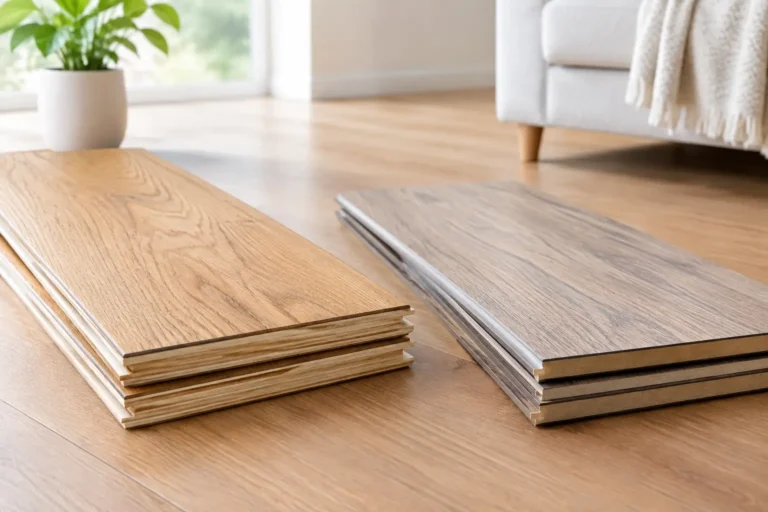
Luxury vinyl tile is made in layers, typically with a protective wear layer over a decorative design and a stable backing or core. It is waterproof by construction, so surface spills and wet footwear are not usually a problem. Many modern rigid-core LVT options use an SPC core, which adds dimensional stability and a reassuringly solid feel underfoot.
Laminate uses a printed decorative layer protected by a tough melamine surface, usually built around a high-density fibreboard core. That top surface can be extremely resistant to scuffs, stains and everyday abrasion. However, the board core is more vulnerable if water reaches joints or exposed edges, particularly if it is left sitting there.
In practical terms, LVT usually has the advantage where regular moisture is part of normal life. Laminate can be an excellent hard-wearing choice in dry rooms, especially when you select a product with a higher AC rating and follow its fitting instructions carefully.
Water is the biggest dividing line
Durability is not only about whether a floor marks. It is also about whether it keeps its shape, finish and performance after the incidents a household actually creates.
LVT is a strong option for areas where splashes, spills or damp shoes are expected. Water will not swell the planks or tiles themselves, and routine cleaning with a well-wrung mop is straightforward. This makes it particularly practical for kitchens, utility spaces, entrance areas and bathrooms, provided the chosen range and installation method are suitable for the room.
With laminate, the surface may cope well with a quick spill, particularly on products marketed with water-resistant joint technology. The key is acting promptly. Water that works into the joins can cause the fibreboard core to expand, lifting the edges of planks and permanently changing the floor’s appearance. A water-resistant laminate is not automatically waterproof, and that difference matters.
For a household where spills are cleaned up quickly and the room stays dry, this limitation may never become an issue. For a busy family kitchen where puddles can go unnoticed, LVT offers more margin for error.
Fitting still matters with waterproof LVT
Waterproof planks do not make every installation waterproof around the perimeter. In a room where water exposure is frequent, the subfloor must be sound and suitably prepared, while edges and transitions need to be finished in line with the manufacturer’s guidance. Glue-down LVT and click LVT have different requirements, so always check the product specification before ordering.
Which surface resists scratches better?
A common assumption is that vinyl will always be softer and laminate will always be harder. There is some truth in this, but the product specification matters more than the category name alone.
Good laminate has a very hard top layer. It can stand up well to the fine scratching caused by chairs, footwear, toys and daily traffic. Products are often classified by AC rating, with higher ratings indicating greater resistance to abrasion. For an active household, a higher-rated laminate offers worthwhile reassurance, especially in living rooms, hallways and dining areas.
LVT’s resistance comes primarily from its wear layer and protective coating. Wear layers are measured in millimetres, with thicker options generally offering better long-term protection in demanding rooms. A 0.30mm wear layer can suit normal domestic use, while 0.55mm is a sensible level to consider for heavier household traffic, rental properties or many commercial settings.
Neither material is scratch-proof. Grit brought in on shoes can mark any floor over time, and dragging furniture is an avoidable source of damage. Felt pads under chair and table legs, a quality entrance mat and regular vacuuming make a real difference to the lifespan of both surfaces.
LVT can be more forgiving of small impacts because it has a little give, particularly when paired with a suitable underlay in click systems. By contrast, a heavy, sharp object can chip laminate’s surface. Once chipped, the exposed core needs attention quickly to reduce the risk of moisture getting in.
The core affects dents, movement and feel
The construction beneath the decorative surface has a major effect on how a floor copes with real use.
Rigid-core SPC LVT is highly stable and handles temperature changes well. It is a useful choice for rooms with wide windows, changing light levels or regular foot traffic. It also disguises small subfloor imperfections better than thinner glue-down products, although no floor should be used to hide serious unevenness.
Glue-down LVT is thinner and relies on a very smooth, well-prepared subfloor. When fitted correctly, it is stable, easy to replace plank by plank if an area is damaged, and well suited to large spaces. Poor subfloor preparation, however, can telegraph through the finished surface and affect its appearance.
Laminate is often fitted as a floating floor using a click-lock system. It needs an expansion gap around the room so the boards can move naturally with changes in temperature and humidity. If it is fitted too tightly, fixed beneath heavy units, or installed over an unsuitable base, the boards can lift or separate. That is an installation issue rather than a weakness of laminate itself, but it directly affects durability.
LVT versus laminate durability in busy rooms
In a dry lounge or bedroom, either option can give years of reliable service. The decision may come down to the design you prefer, the feel underfoot and your budget. Laminate often delivers a convincing wood effect at a keen price, with a crisp, firm surface that resists everyday scuffs well.
In a hall, consider the amount of grit and wet footwear the space receives. A high-specification laminate can perform well with good mats and regular cleaning, but LVT removes the concern about water at the door. If pets, prams or bikes regularly pass through, a thicker wear layer and a practical mid-tone design will help hide light marks between cleans.
For kitchens and utility rooms, LVT’s waterproof construction gives it the clearer durability advantage. It is also comfortable to stand on when preparing food and generally quieter underfoot than laminate. Laminate remains viable in carefully managed dry kitchens, but it requires more caution around leaks, dishwasher mishaps and standing water.
For bathrooms, choose a floor that is designed and approved for that environment. LVT is normally the more straightforward route because the material itself will not swell after contact with water. Pay close attention to fitting details around baths, toilets and doorways.
Do not compare thickness alone
It is tempting to assume the thicker product will last longer. Thickness can improve stability, comfort and sound reduction, but it does not tell the full durability story.
For LVT, check the wear-layer thickness, core type, total thickness, warranty and whether the product is rated for domestic or commercial use. A thinner glue-down plank with a substantial wear layer may outperform a thicker click plank with a lighter-duty surface in a high-traffic setting.
For laminate, look at the AC rating, board thickness, locking system and stated moisture protection. A thicker board can feel more substantial and help with minor subfloor variation, but a strong surface rating and correctly sealed joints are equally important.
The manufacturer’s warranty is useful evidence of intended performance, but it is not a substitute for choosing the right product for the room. Most warranties require the floor to be fitted, cleaned and maintained as instructed.
Maintenance that protects your investment
Both materials benefit from simple, consistent care. Remove loose grit regularly using a soft brush vacuum attachment or dry mop, then clean with products recommended for the particular floor. Avoid steam mops unless the manufacturer specifically permits them, as heat and moisture can affect joins, adhesives and surface finishes.
Do not flood a laminate floor when mopping. Use a lightly damp cloth or mop and dry any remaining moisture promptly. With LVT, routine moisture is less of a concern, but abrasive cleaners, solvent-based products and scouring pads can dull the protective finish.
Use protective cups under heavy furniture and lift rather than drag items across the floor. In areas with strong direct sunlight, blinds or curtains can help reduce long-term fading and uneven colour change.
The practical choice for long-term durability
Choose LVT when moisture resistance, easy cleaning and a forgiving surface are high on your list. It is often worth the extra initial spend in rooms where water and heavy family life are unavoidable. Choose laminate when you need a hard, realistic surface for a dry room and want excellent value from a product with a suitable abrasion rating.
Before deciding, order samples and look beyond the colour. Feel the surface, compare the plank construction and check the wear layer or AC rating against the room you have in mind. A floor that fits the way your home is actually used is the one most likely to keep looking good for years.