A warm floor should feel like a quiet luxury, not a compromise on the finish you want. Yet the surface you choose has a direct effect on how quickly heat reaches the room, how evenly it spreads and how well the floor performs over time. The best flooring for underfloor heating is the one that is approved for your system, allows heat through efficiently and suits the demands of the room.
That means looking beyond colour, plank width and price. A beautiful floor that acts as insulation can make a responsive heating system feel slow. Equally, a material that conducts heat well may not be the sensible choice for a busy family bathroom or a lounge where comfort underfoot matters most.
What is the best flooring for underfloor heating?
For most UK homes, LVT is the strongest all-round choice. It is slim, practical and available in realistic wood and stone designs, so heat can pass through it effectively without limiting your design options. Glue-down LVT is especially efficient because it sits close to the subfloor, while many click LVT and SPC products are also suitable when the manufacturer confirms their underfloor-heating compatibility.
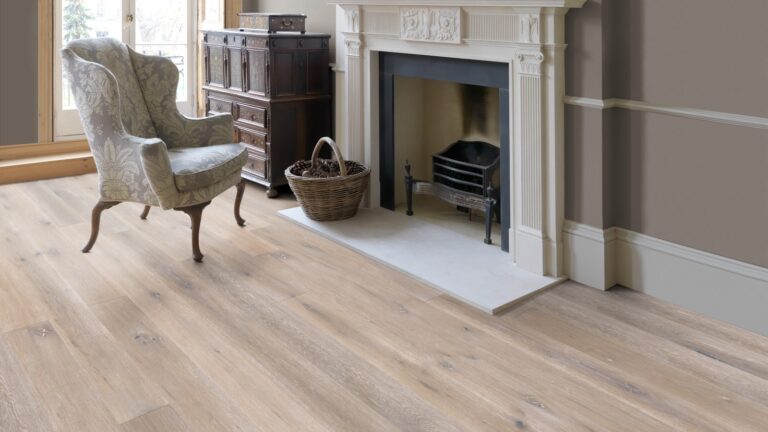
Engineered wood is another excellent option when you want genuine timber character. Its layered construction is more stable than solid wood, but it still needs careful temperature control and a product specification that permits use with underfloor heating.
Ceramic and porcelain tiles transfer heat exceptionally well, although they create a harder, more clinical feel in some living spaces. Carpet can work too, provided the combined tog rating of the carpet and underlay remains within the heating system’s limit. There is no single winner for every room. The right answer depends on warmth, water exposure, footfall and the installation method.
Start with heat resistance, not appearance
Every floor covering and underlay slows heat down to some degree. This is measured by thermal resistance, sometimes shown as an R-value or tog rating. Lower resistance generally means faster, more efficient heat transfer.
Your underfloor-heating manufacturer will set a maximum resistance for the complete floor build-up. This includes the floor covering, adhesive where relevant and any underlay. Do not assess these parts in isolation. A low-tog carpet paired with a thick, insulating underlay can still hold back heat.
Surface temperature matters as well. Many floor products are designed for a maximum finished floor temperature of 27°C, though the precise limit always comes from the flooring manufacturer. Pushing above it can lead to movement, gapping, distortion or a damaged finish, particularly with wood-based products.
Water systems tend to warm gradually and steadily. Electric systems can react faster, which is useful in smaller spaces but makes correct thermostat settings even more important. In either case, use a floor sensor where specified and increase the temperature slowly when the system is first commissioned or restarted after a long break.
LVT: the practical all-rounder
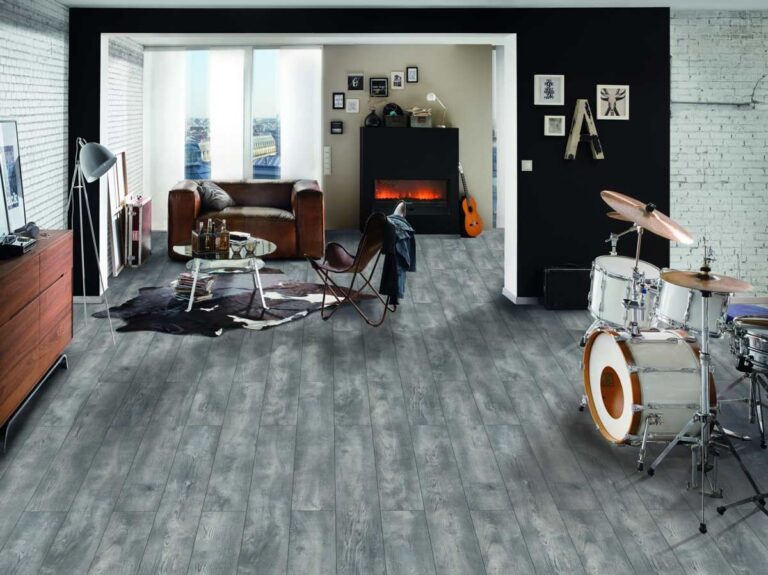
LVT earns its place in kitchens, hallways, living rooms and bathrooms because it is waterproof, durable and realistic. Its relatively thin construction helps it work efficiently with underfloor heating, while its protective wear layer stands up to everyday scuffs, spills and busy household traffic.
Glue-down LVT is often the first choice where heat efficiency is the priority. It is bonded directly to a smooth, prepared subfloor, leaving no separate underlay layer to slow down the transfer of heat. It also gives a stable, low-profile finish that suits larger open-plan rooms.
Click LVT and rigid-core SPC boards offer a quicker floating installation and can be a good fit for renovation projects. Check the individual product details before buying. Some ranges require a specific underlay, while others must be installed without one or have strict limits on underlay thickness. The core, backing and click system all affect suitability.
For bathrooms and utility areas, choose a product intended for wet-room conditions and follow the fitting guidance around perimeter gaps, sealing and subfloor preparation. Waterproof planks protect the surface, but water can still find its way beneath a poorly installed floor.
Choose the wear layer for the room
Underfloor heating does not reduce the need to match a wear layer to the space. A family kitchen, entrance hall or rental property benefits from a tougher specification than a low-traffic bedroom. The finish should be selected for real life first, then confirmed as compatible with the heating system.
Engineered wood: real timber with the right safeguards
If the look and texture of real wood are non-negotiable, engineered boards are the sensible route. They are built from layers that help reduce the natural expansion and contraction associated with changes in temperature and humidity.
That does not make engineered wood maintenance-free. Keep the heating stable rather than switching it from cold to high heat in a single afternoon. A gradual change protects the boards and helps the room warm more evenly. You should also maintain a sensible indoor humidity level, especially through winter when central heating can dry the air.
Narrower boards and products with a stable multi-layer core can be a safer choice than very wide boards, but the manufacturer’s approval is the deciding factor. Installation matters too. Some engineered wood floors can be floated over a suitable underlay; others are better fully bonded. A bonded installation usually gives better thermal transfer, while a floating floor may be more practical for certain subfloors and projects.
Avoid assuming that solid wood will behave in the same way. It is more prone to movement and is often not recommended over underfloor heating unless a manufacturer specifically states otherwise.
Carpet: warm, quiet and still compatible
Carpet brings softness, sound reduction and barefoot comfort to bedrooms, stairs and lounges. With underfloor heating, the key is not to choose the thickest pile by default. The combined carpet and underlay tog rating must stay below the limit set by the heating system, commonly around 2.5 tog, although you must confirm your own specification.
A dense, lower-tog underlay made for underfloor heating can make a noticeable difference. It supports the carpet without unnecessarily insulating the room from the heat below. This is one area where changing the underlay, rather than the carpet itself, can keep your preferred look within the recommended limit.
Carpet will normally feel warm sooner than a hard floor because it retains warmth at the surface. However, it may take longer for the system to heat the room. It is a comfortable choice where acoustic performance and softness matter more than the fastest possible response time.
Other suitable options to consider
Sheet vinyl is a useful, budget-conscious choice for kitchens, bathrooms and utility rooms. It is comfortable underfoot, straightforward to clean and generally thin enough to work well with underfloor heating when the chosen range is approved for it. Pay particular attention to the adhesive and the condition of the subfloor, as unevenness can show through a sheet finish.
Waterproof laminate boards can also be used where the product is rated for underfloor heating. They offer a hard-wearing, wood-effect look at a keen price point, but check the maximum surface temperature, required expansion gap and approved underlay carefully. A thick foam underlay can undermine heat performance, even when the boards themselves are suitable.
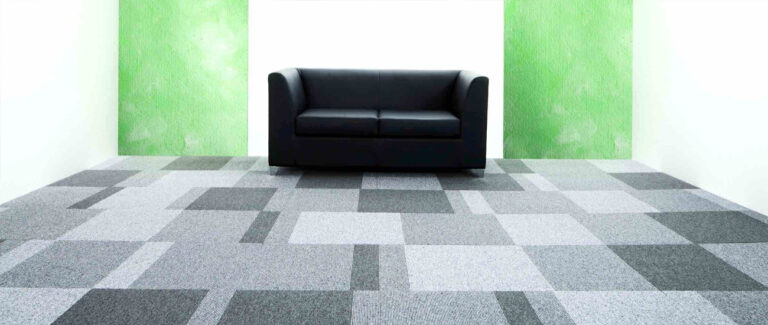
For commercial settings, safety vinyl and carpet tiles need the same specification-led approach. Consider thermal resistance alongside slip resistance, wear classification, cleaning requirements and the likely traffic level. A product that works in a quiet office may not be appropriate for a reception area, shop floor or shared corridor.
Fitting details that make or break performance
Underfloor heating needs a flat, dry and properly prepared subfloor. This is particularly important for glue-down LVT, sheet vinyl and engineered wood, where small imperfections can affect the finished result. Moisture testing is essential on new screeds and ground floors. Do not rely on the surface looking dry.
The heating should be commissioned before fitting where the system instructions require it, then switched off or reduced during installation. After fitting, bring it back up gradually according to the flooring and heating guidance. Rushing this stage is a common cause of avoidable movement and adhesion issues.
Rugs deserve a mention too. A large, thick rug can trap heat and create hot spots, especially over electric heating mats. Use rugs with care, avoid heavily insulated backings and do not cover areas containing sensors or controls.
Before ordering, request samples and place them in the room where they will be used. See the colour in your own daylight, feel the texture and compare finishes alongside cabinets, paint and furniture. Then check the product’s underfloor-heating approval, fitting method and temperature limit against your system. That small amount of preparation gives you a floor that looks right, heats well and stays that way.