A home office floor has to deal with more than a desk and a chair. It takes daily castor-wheel traffic, coffee near-misses, chair movement and the noise that travels through a busy household. Carpet tiles for home offices offer a practical answer: they are warm underfoot, help soften sound and let you replace one damaged section rather than the whole floor.
They are particularly useful where a spare room needs to work harder, whether it is a permanent study, a part-time workspace or a converted loft. The right specification matters, though. A tile that looks smart in a low-use guest room may not be the best choice beneath a rolling office chair used eight hours a day.
Why carpet tiles suit a home workspace
Carpet tiles are modular squares or planks, usually fitted directly to a prepared subfloor with tackifier adhesive or another approved fixing method. Their format is their main advantage. If one area becomes stained, worn or damaged, you can lift and replace individual tiles without disturbing the rest of the room.
That makes them a sensible choice for home offices used for work, hobbies and family life. Compared with a hard floor, carpet tiles also reduce the sharper sound of footsteps and chair movement. In upstairs rooms, this can make a noticeable difference to the room below.
They also bring more warmth than a hard surface, which matters when you are sitting at a desk for long periods. A carpet tile is not designed to make a room silent, but its pile and backing can help absorb everyday sound and make the space feel less echoey.
The trade-off is that carpet tiles need regular vacuuming, particularly around desk areas where dust, crumbs and fibres gather. They are also less suitable if your office regularly doubles as a place for muddy footwear, wet pets or messy crafts. In those cases, choose a low-maintenance floor for the wider area and use a practical rug or chair mat at the desk.
Choosing carpet tiles for home offices
The best carpet tile depends on how the room is used, not simply its colour or price. Start with the traffic level. A room used occasionally for admin or homework can suit a lighter-duty domestic option. For a full-time workspace, look towards commercial-grade carpet tiles designed for regular footfall and office furniture.
Pick a low, dense pile for chair movement
Office chairs place concentrated pressure on the floor, especially with hard castors. A low-level loop pile is often the most practical option because it is dense, stable and easier for castors to move across than a deep, soft pile. It tends to show less flattening in the area beneath the chair, too.
A thicker or more textured tile can feel comfortable, but it may make chair movement heavier. If comfort is your priority, it can still work well in a low-use office or reading space. For a desk used every day, practicality usually wins.
Check the product specification for its suitability in commercial or contract settings where available. This is a useful indicator of how well a tile is likely to cope with repeated use. The tile backing also contributes to stability, comfort and sound reduction, so compare the full construction rather than pile appearance alone.
Choose colours that work with real life
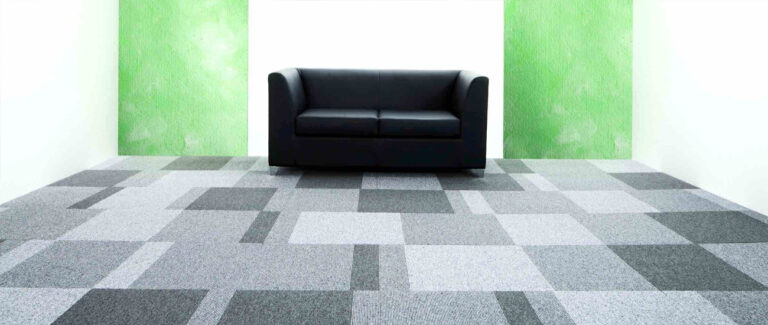
Very pale carpet tiles can brighten a compact office, but they show tea splashes, scuff marks and the route from desk to door more quickly. Mid-tone greys, flecked designs and subtle patterned finishes are popular for a reason: they disguise everyday marks while still looking clean and professional.
Charcoal and darker tones suit modern studies and can help ground a light desk setup. Beige, taupe and muted blue-grey tiles create a softer look, especially in rooms that are also used as bedrooms. If you are working with a small or north-facing space, order samples first. The same tile can look noticeably different in natural daylight and under warm bulbs.
A design with tonal variation is often the most forgiving choice. It gives the floor depth without making the room feel busy on video calls.
Think about the layout before you order
Most carpet tiles are square, although carpet planks are also available. Squares can be laid in a uniform direction for a calm, traditional appearance, while quarter-turn installation creates a subtle checkerboard effect that helps conceal joins and variation in the pile.
Plank formats can give a more contemporary look and work especially well in longer, narrow rooms. Directional designs need more planning, as the layout affects the final appearance. Always check the manufacturer’s fitting guidance before deciding whether tiles should be laid monolithic, quarter-turn or in a specific pattern.
Order enough material to include a sensible allowance for cuts, awkward doorways and future repairs. Keeping a small number of spare tiles from the same batch is good practice. It means a replacement is more likely to match if a tile is damaged months later.
Prepare the subfloor properly
Carpet tiles can be forgiving in use, but they are not a shortcut around subfloor preparation. The floor beneath must be dry, clean, smooth and sound. Dust, loose paint, old adhesive residue and uneven patches can affect how well the tiles sit and bond.
A concrete subfloor may need moisture testing before installation, particularly in ground-floor rooms, garages converted into offices or newer extensions. Excess moisture can interfere with adhesive and cause flooring issues over time. Timber floors should be secure and level, with protruding fixings dealt with before fitting.
Small surface imperfections may show through carpet tiles or cause rocking at the joins. Where the floor is uneven, appropriate smoothing or preparation work is usually worth doing before the tiles arrive. It improves the finish and helps office chairs roll more evenly.
Use the right adhesive system
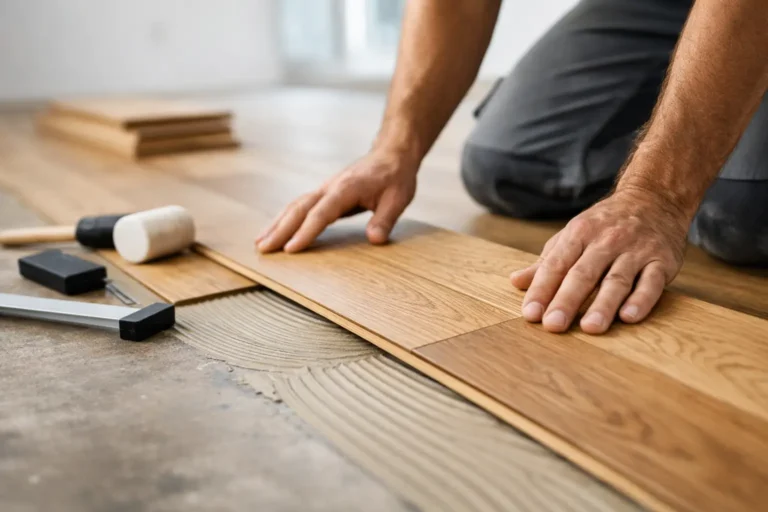
Many carpet tiles are fitted with a pressure-sensitive tackifier. This holds the tiles in place while allowing individual pieces to be lifted later for replacement. It is a practical system for a home office, but it must be used in line with the adhesive and tile manufacturer’s instructions.
Do not assume every carpet tile is loose-lay or suitable for every adhesive. Backing types vary, and the wrong product can make future lifting difficult or affect performance. If you are unsure about the subfloor, adhesive coverage or the installation pattern, getting advice before ordering is cheaper than correcting a poor fit afterwards.
Protect the floor around your desk
The area directly beneath an office chair gets the hardest treatment. A chair mat can help spread the load and reduce wear, particularly if you use a wheeled chair all day. Choose a mat designed for carpet rather than a smooth-floor mat, as it needs to sit securely over the pile.
You can also improve performance by checking your chair castors. Soft castors are generally kinder to carpeted surfaces than hard plastic alternatives and can reduce dragging. Avoid placing heavy filing cabinets or desk legs directly on a loose edge or tile join where possible.
If you expect frequent chair movement, position the tile layout so the most used area does not rely on a single narrow cut tile. Full tiles beneath the desk zone create a stronger, neater result.
Cleaning and replacing individual tiles
Regular vacuuming is the simplest way to keep a carpet tile floor looking good. Use a suitable vacuum setting for the pile and pay attention to the chair area, skirting edges and beneath the desk. Deal with spills quickly by blotting with a clean, absorbent cloth rather than rubbing, which can push the stain further into the fibres.
For tougher marks, follow the cleaning guidance provided for the specific tile. Some products respond well to approved carpet cleaners, while others have particular recommendations based on their fibre and backing construction. Test any cleaner in a discreet area first.
When a tile cannot be cleaned, replacement is straightforward if it was fitted correctly. Lift the affected tile carefully, clean away any loose debris and fit a matching spare according to the original adhesive method. This repairability is one of the strongest reasons to choose carpet tiles over a broadloom carpet in a hard-working office.
When carpet tiles are not the best fit
Carpet tiles are an excellent choice for many home offices, but they are not the automatic answer for every room. If the space is prone to damp, has direct access from a muddy garden or is used for projects involving paints, oils or frequent spillages, a textile surface may demand more care than you want to give it.
They can also feel more functional than luxurious, depending on the range selected. Higher-quality tiles with well-designed textures and colours can look refined, but a low-cost, heavily speckled commercial style may not suit a formal study. Samples are the easiest way to judge pile feel, backing thickness and colour in your own room.
A carefully chosen carpet tile gives a home office a quieter, warmer foundation without making future repairs a major project. Measure the room accurately, choose a specification that matches your chair use and keep a few spare tiles aside. That small bit of planning pays off every working day.