A cold floor on a January morning, a dropped mug, a rushed fitting deadline: these are the moments that make a flooring choice feel less theoretical. When comparing LVT versus ceramic tiles, both offer a smart, durable finish, but they behave very differently once they are underfoot. The better option depends on your room, subfloor, budget and how you want the space to feel every day.
LVT versus ceramic tiles at a glance
Luxury vinyl tile, usually shortened to LVT, is a multi-layer vinyl floor made to recreate the appearance of stone, wood or patterned tile. It is available in plank and tile formats, with glue-down, rigid click and loose-lay fitting systems. Ceramic tiles are fired clay tiles with a hard glazed or unglazed surface, fixed individually using adhesive and finished with grout.
Ceramic is the more traditional hard surface and can give a premium, permanent feel. LVT is warmer, quieter and generally quicker to install. Neither is automatically the right answer. A compact cloakroom with an uneven timber floor presents a different challenge from a sunroom, entrance hall or rental property needing a fast refresh.
The key difference is in the build
Ceramic tile is exceptionally hard, but it is rigid. That means it needs a stable, well-prepared base. Movement in a timber subfloor or poor preparation can lead to cracked tiles or grout lines.
LVT has more give underfoot. Rigid-core click LVT, including SPC options, adds stability and can be a practical route over many prepared existing floors. Glue-down LVT follows the condition of the subfloor more closely, so levelling and smoothing are still essential for a clean finish. The product may be forgiving to live with, but fitting preparation is never a place to cut corners.
Comfort, warmth and noise
This is where LVT often has the immediate advantage in a home. It feels less cold under bare feet than ceramic and has a little more cushioning, which is useful where people stand for long periods. It also absorbs more everyday sound, such as footsteps, toys and chairs moving across the room.
Ceramic naturally feels cooler and harder. Some homeowners prefer that crisp, solid sensation, particularly in bright spaces with a clean, minimal look. It is also an excellent conductor of heat, so it works particularly well with a properly designed underfloor heating system.
LVT can also be suitable with underfloor heating, provided the chosen range and installation method are approved by the manufacturer. Check the maximum surface-temperature guidance before ordering. With either floor, correct temperature control matters as much as the material itself.
Water, spills and day-to-day life
Both materials cope well with splashes and spills. LVT is waterproof as a material, while ceramic tile is highly water-resistant and its glazed surface is easy to wipe clean. The important distinction with ceramic is the grout. Grout is porous unless properly sealed or specified as a low-porosity alternative, and it needs more attention than the tile face.
For homes with children, pets or regular muddy shoes, LVT can be the easier floor to maintain. A sweep and a damp mop with a suitable cleaner are usually enough. There are no grout lines to scrub, and the surface feels more forgiving if something is dropped.
Ceramic has an edge where you expect sustained moisture, provided it is fitted and grouted correctly. However, water performance should not be confused with slip performance. A highly polished ceramic tile can become slippery when wet, while many LVT and ceramic options are available with textured finishes or tested slip-resistance ratings. For entrances, utility spaces and commercial settings, check the actual safety specification rather than relying on appearance alone.
Durability: scratches, dents and cracks
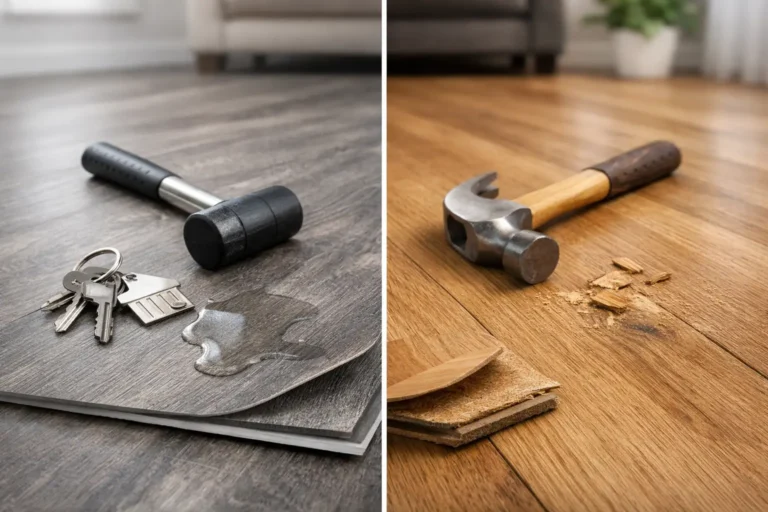
Ceramic is difficult to scratch in normal domestic use and handles heat very well. It is a strong choice where surface wear is the main concern. Its weakness is impact: a heavy pan, dropped tool or sharp knock can chip a tile. Replacing one tile is possible, but a matching spare is only useful if you have kept it from the original batch.
LVT is highly durable, but its performance varies by range. The wear layer is especially relevant. A thicker wear layer provides more protection from scuffs and surface marks, making it a sensible consideration for busy homes, rentals and commercial projects. Textured or embossed finishes can also disguise minor marks better than a very smooth design.
LVT is less likely to crack when an item is dropped, but it can dent under concentrated weight. Protect it from narrow furniture legs, move heavy appliances carefully and use suitable pads under furniture. Ceramic is the harder surface; LVT is generally the more forgiving one.
Appearance and design freedom
Ceramic offers authentic mineral depth, natural variation and a wide choice of shapes, from large-format stone effects to decorative patterned designs. Grout can become part of the look, creating clear lines and a classic tiled finish. Large tiles with narrow grout joints can make a floor feel calm and continuous, although they demand an especially flat base.
LVT has become remarkably realistic, particularly in stone-effect tile formats with registered embossing and matt finishes. It is a good fit if you like the look of slate, limestone, concrete or encaustic-style patterns but want a softer floor and simpler cleaning routine. The lack of grout lines gives LVT a more continuous appearance, while tile-effect designs retain a clear, structured layout.
Samples matter here. A screen cannot show how a tone changes in the light from your windows, or whether a textured finish feels right underfoot. Comparing a few samples beside cabinetry, paint and existing furnishings is one of the simplest ways to avoid an expensive mismatch.
Installation time and disruption
Ceramic is a skilled, slower installation. The subfloor may need levelling, tiles need cutting and setting, adhesive requires curing, and grouting adds another stage. A tiled floor can be an excellent long-term investment, but it is rarely the quickest route to a finished room.
LVT is usually faster to fit, particularly click systems. A floating click floor can avoid adhesive drying time, although expansion requirements and manufacturer instructions still apply. Glue-down LVT takes longer to prepare and fit, but can be ideal where a lower profile, individual plank replacement or a more permanent installation is required.
The condition of the subfloor is the deciding factor many buyers overlook. A bumpy floor can show through thin LVT, while a weak or moving base can cause problems under ceramic. Ask an installer to assess moisture, flatness and stability before committing to either material. This protects the finish and keeps any product warranty conditions on the right track.
Cost: look beyond the price per square metre
Entry-level LVT can cost less than quality ceramic, and its lower fitting time can reduce overall project costs. That said, premium LVT with a strong wear layer, detailed embossing and a rigid core may cost more than basic ceramic tiles.
Ceramic prices also cover a broad range. The tile itself may look affordable, but adhesive, grout, trims, levelling materials, cutting and professional labour can significantly change the final figure. LVT needs accessories too, including underlay where specified, smoothing compound, adhesive or finishing profiles.
For a realistic comparison, price the complete floor rather than just the visible material. Measure the room carefully, allow for cuts and wastage, and include subfloor preparation. This is especially relevant on larger projects, where a small difference per square metre soon adds up.
Which floor suits your priorities?
Choose LVT if you want a realistic tile look with a warmer, quieter feel, straightforward cleaning and a potentially quicker installation. It is particularly practical when comfort matters, when you are improving a rental property, or when you want a low-maintenance hard floor without grout lines.
Choose ceramic if you want an exceptionally hard, heat-tolerant surface with genuine tile character and are happy to invest in thorough preparation and professional fitting. It is a strong option for homeowners who value permanence and do not mind a cooler, firmer floor.
For either choice, do not select on colour alone. Check the fitting method, thickness, wear layer or tile rating, slip resistance, underfloor-heating suitability and the condition of the subfloor. Flooring King offers up to three free samples, which makes it easier to compare the practical details as well as the finish. The best floor is the one that still feels right after a wet school run, a busy weekend and years of ordinary life.